Alumni Spotlight
From Placement Student to Rural Social Worker in Broken Hill
For Georgina Chambers, a rural placement through the Broken Hill University Department of Rural Health (BHUDRH) opened the door to a career path she never expected. After undertaking a social work placement in Broken Hill as a University of Sydney student, Georgina has since returned to the Far West and now lives and works in the community she first discovered on placement.
Let’s hear from Georgina.
Tell us a little about yourself and your career journey since graduating from the University of Sydney.
I completed a Master of Social Work (Qualifying) at the University of Sydney after originally studying a double degree in Environmental Studies and Arts at ANU. Before starting social work, I worked in administration at St Vincent’s Hospital, where I was inspired by the social workers I met across mental health, palliative care and transplant services.
After graduating, I worked as a mental health clinician with Ryde Community Mental Health in Sydney for 18 months before applying for a role in Broken Hill. Today, I live and work in Broken Hill as a Joint Child Protection Response Program (JCPRP) clinician and Violence Abuse and Neglect Service (VANS) counsellor.
What prompted you to undertake a rural placement in Broken Hill?
I had never lived in a rural or remote community, so I saw it as a unique opportunity to challenge myself and gain a different perspective on social work practice. I was also keen to undertake another direct-practice placement experience and felt that Broken Hill would provide opportunities that may not have been available in a metropolitan setting.
I arrived with an open mind and few expectations, but Broken Hill quickly exceeded them. I genuinely loved my time there as a student.
Before your placement, had you ever considered living or working in a rural community?
Honestly, no.
Before my placement, I had never really considered living or working rurally. However, my experience in Broken Hill completely changed my perspective. I loved the town’s authenticity, strong sense of community and unique character.
When I finished placement, I never imagined I would return permanently. But later, when I saw a position advertised in Broken Hill, moving back didn’t feel daunting because I already knew the community and felt confident I could make a positive contribution. My placement experience played a significant role in that decision.
What was it like living in Broken Hill as a student?
One of the highlights was the strong student network. There were students from a range of disciplines completing placements at the same time, so there was always someone to explore Broken Hill and the surrounding region with on weekends.
The community spirit also stood out to me. I was particularly impressed by how passionate the town is about local sport and how people genuinely rally behind community events and activities.
How was your rural placement different from your metropolitan learning experiences?
My placement at Morgan Street Primary School gave me a level of independence that I hadn’t experienced elsewhere. Unlike metropolitan placements where I spent significant time shadowing another social worker, I was encouraged to develop the role, take initiative and create programs that responded to the school’s needs.
I facilitated counselling sessions, ran a Drumbeat group and developed a project plan for a yarning circle at the school. The experience helped build my confidence in working autonomously and thinking creatively.
What were some of the most valuable lessons you gained during placement?
One of the most important lessons was learning to work alongside Aboriginal communities and critically reflect on how social work practice can be decolonised. Prior to placement, I had very limited experience working with Aboriginal clients and families.
The placement encouraged me to think deeply about meeting people where they are, practising Dadirri or deep listening, and building genuine partnerships with First Nations people. These lessons continue to shape how I work today and have become fundamental to my professional practice.
How did BHUDRH support you throughout your placement experience?
The support provided by BHUDRH was invaluable.
Regular social work supervision, ENRICH sessions and group learning opportunities helped broaden my understanding of rural and remote healthcare while also connecting me with other students.
The friendships and professional networks I developed during my placement became one of the most rewarding aspects of the experience.
Were there any people who helped shape your rural placement experience?
Absolutely. My supervisor, Hannah Dean, was instrumental in helping me feel welcome and connected to the community. She remained someone I could turn to for advice when I later decided to pursue rural practice.
I also remember Claire, the speech pathology educator who delivered the Drumbeat program. She created a supportive learning environment and helped make my placement experience so positive.
Looking back now, how did your placement influence your decision to return to Broken Hill after graduation?
While I initially returned to metropolitan practice and spent 18 months working in Sydney, my placement experience stayed with me. It gave me confidence in my abilities as a social worker and showed me the opportunities available in rural communities.
When the opportunity to join the Joint Child Protection Response Program (JCPRP) in Broken Hill arose, it felt like the right next step. It was a role that offered unique career opportunities and allowed me to return to a community where I already felt connected and valued. Today, I continue to live and work in Broken Hill, supporting children, young people and families across the Far West region.
What do you value most about rural practice and rural life now?
The variety is incredible.
Through my role, I regularly travel to communities including Wilcannia, Dareton, Wentworth, Ivanhoe and Menindee, places I may never have visited otherwise.
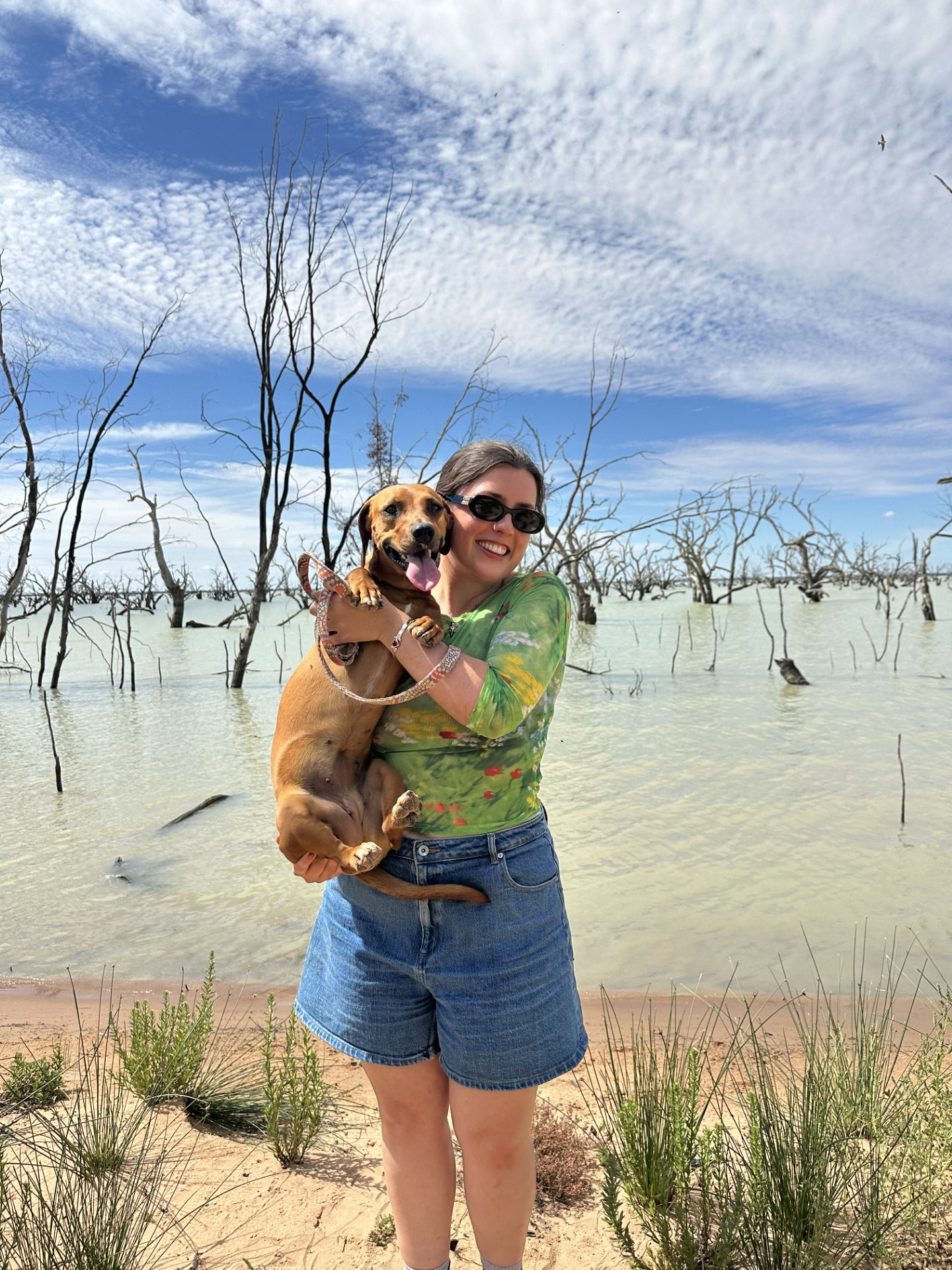
I also love the close-knit nature of the community, the short commute to work and being able to walk from my house into the bush to watch a sunrise or sunset.
Living and working in Broken Hill has given me opportunities and experiences I never imagined when I was a student.
What would you say to University of Sydney students considering a rural placement?
Take the opportunity.
A rural placement allows you to experience a different part of Australia while developing skills that are highly valuable as a future health professional. You’ll learn from practitioners who are adaptable, community-focused and committed to finding innovative ways to meet local needs.